Now that that's out of the way, I'm gonna talk a little bit about an notion of classification that reading Langston has made me think about. In the case of Langston Hughes, I think too often he is thought of as an "American Poet" or an "African-American Poet." And yeah, you got me, those are both true. I'm not disputing that at all. Here's my deal though. You read "A Dream Deferred" to anyone that understands English, and if they don't understand English find yourself a decent translation, and they're gonna get it. They'll understand all the emotion that is running through the words on that page, the words that are coming out of your mouth as you read it to them. In that poem, Hughes is talking about something that isn't just American or African-American. He's talking about disappointment. And unless everyone I've ever met and I having been doing this whole life thing completely wrong, disappointment is a part of life. I'd argue a big part at that.
This sort of goes back to the model of reading we discussed in class with the three boxes: Author, Text, and Reader. Context is important, yes, but don't let the context change, lessen, or narrow what's actually put down in black and white on that pages. Langston Hughes was an American. He was an African American. You can use these facts to understand life out of which his poetry was born. However, don't let the classification of a writer exert too much influence on how you understand a work.
It was interesting to read about the Bridgeport area as a Chicagoland native. This is the neighborhood the Daley's came from, and when one thinks of ethnic ghettos, the first thing that comes to mind isn't usually the single most influential family in a city for over half a century. What the Daleys had, and probably still have in Chicago is an indisputable dynasty. From Richard J. to Richard M. and possibly even on further, having as much influence in a city as large as Chicago means your power doesn't end at the city limits.
What really shocked me about this article was that I'd never really thought about the de facto segregation of Chicago as much as I should have until now. Growing up it was never strange to me that there was the South Side Irish St. Patrick's Day Parade or the Bud Billiken Parade, the oldest and largest African-American parade in the US. I had read in the past that Chicago remains one of the most segregated cities in the county (Source: http://www.businessinsider.com/most-segregated-cities-in-america-2011-3#3-chicago-has-a-752-white-black-dissimilarity-score-20 ) but I failed to really think about how that has affected the culture in which I was brought up.
My mom's side of the family grew up in Harwood Heights, a small community comprised of mostly Polish and Italian immigrants. Once my parents married, they moved out to the far northwest suburbs to raise their children. Once I was in high school, it somehow came up one day that 2 of my good friends' moms went to high school with my mom and one of them even ended up marrying someone from the same high school my dad went to. Looking back after this reading, maybe this shouldn't have surprised me as much as it should. My friend and I are both Polish whose parents went to the same Catholic high school, and ended up meeting at another Catholic high school in further out suburbs.
Ragtime has got me thinking about social class in America today, and the many nuances that it includes. There are obviously countless examples of these, but in this post I will focus solely on the phenomenon that is Odd Future Wolf Gang Kill Them All. OFWGKTA is a L.A. based hip-hop collective, composed of young male rappers and producers. Their unofficial frontman is a rapper that goes by the name Tyler, the Creator.
In Tyler's raps he, often very graphically, brings up topics such as doing drugs, having both consensual and nonconsensual sex, and how growing up without a father has affected his upbringing, often including a use of copious amounts of obscenities, misogynistic, and homophobic slurs. The fact of the matter is, like many members of Odd Future, Tyler, the Creator is an angst ridden young man who grew up in a bad neighborhood, and saw music as his way out. Whether you like they're music or not, lyrically Odd Future songs are often incredibly complex lyrically. There is an undeniable level of irony in the whole Odd Future phenomenon though.
The demographics that have embraced Odd Future music is complex and in many ways confusing. Odd Future has appeared on Late Night with Jimmy Fallon (video: http://en.musicplayon.com/play?v=473675&Odd_Future__Sandwiches_On_Jimmy_Fallon__Live__2011__English__Lyrics__lyrics_Ringtone), and garnered attention from media outlets including Pitchfork, NPR Music (http://www.npr.org/blogs/therecord/2011/06/21/132283971/why-you-should-listen-to-the-rap-group-odd-future-even-though-its-hard), and even a piece in the New Yorker (http://www.newyorker.com/reporting/2011/05/23/110523fa_fact_sanneh).
Even with all this attention, though, Odd Future is not playing the game by anyone's rules but their own. They signed with Sony last April...sort of. Basically they were allowed to create their own label under the umbrella of Sony Music and have managed to maintain complete artistic freedom in the process. In response to the attention Odd Future has been given by Pitchfork, Tyler, the Creator raps in the song Yonkers "I'm stabbing any blogging faggot hipster with a Pitchfork" then went and was invited to perform at Pitchfork Music Festival in Chicago this summer.
In Odd Future you find some of the most unusual social class paradoxes available today. Here is a group that is screaming out against a world that they feel has done them wrong, and some of the very people they're yelling out against are paying them to keep right on screaming. They have crowds of well educated, usually pretty well off fans yelling "Kill People, Burn Shit, Fuck School" at they're shows. Maybe this is telling of some deeper social rift present in American culture today, or maybe it's people embracing what Odd Future really is: a bunch of kids messing around and having as much fun as possible regardless of what other people think.
And for anyone that's into Odd Future already, here is a clean version of Sandwiches they did for BBC...which is just hilarious really.
In class Monday, we discussed how Doctorow is acting out against "Cold War Theory" and the literary styles of the time, then proceeded to discuss how the actual physical item of a book influences how the reader interprets it. What came to mind for me that relates to both of these topics is the book Incredibly Loud and Extremely Close by Jonathan Safran Foer. In his novels, he has embraced a style of writing that includes pictures, font changes, unusual word spacing, and other visual elements that can't properly be reproduced in audiobooks or ebooks. When reading a novel like this, reading is even more of a visceral experience, where the actual book is a much more tactile experience. When you're reading pages like this:
where a man is trying to get all he can down in the finite number of pages he has, there is an emotional connection with each page turn. He's not running out of memory on his Kindle, he's furiously scribbling as much as he can, and every time the reader turns the page they realize that the page is gone for him. He can't have it back. And there is a lot of power in that.
This style can be interpreted as an act against the digitization of print media including books. By utilizing the actual object of the book in ways rarely used before exploits flaws in ebooks. Sidenote: If the book is replaced by the ebook, the pop-up book dies...until we can master ebook holograms.
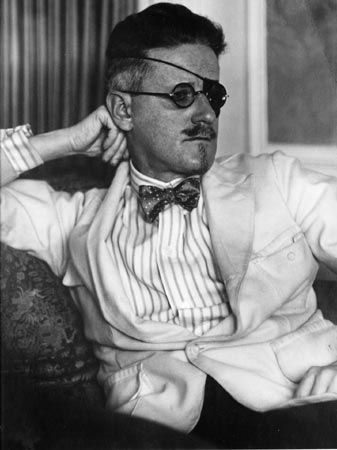
After some confusion that had to do with temporary gmail accounts and things of that nature, I think i have figured out how to log into my blog again. After a heavy dose of Ragtime, I think I'm finally starting to really get into it. It is certainly an unusual style of narration with a meandering narrative. In Ragtime Doctorov seems to present a third person narration that, from I can discern in my early readings, similar to Joyce's Portrait of the Artist as a Young Man in that the narrator, although more subtly, gains a consciousness as the novel progresses. Interestingly, while Protrait's characters are Irish and there is a focus on the struggle for freedom, in Ragtime, which is set later in history, there are immigrants, some of which are Irish, also struggling for freedom via class mobility. So although the time and location has changed, the struggle still persists. As I mentioned though, I'm am not yet far enough into Ragtime to fully flesh out any parallels between the two aforementioned novels. And on that note I'll leave you with a picture of James Joyce looking like a boss and get back to reading.
(Image taken from http://biblioklept.org/2008/09/22/james-joyce-reads-you-listen/)