Wednesday, November 2, 2011

Reflections on Company Towns


Maintaining a functioning company town requires a delicate balance on the part of the overseer. As the examples of Pullman and Homestead show, when a company is so completely involved in the lives of a its workers imbalances can lead to catastrophe. Although company towns can lead to an increased quality of life for its workers and residents, it also limits their freedom. When everything within the city limits is owned by the same company, variety can easily become scarce.

On the producer side, however, the idea of a company town is a promising concept. For one, you can help ensure that your workers are well provided for, thus increasing productivity. Also, the money you pay workers will largely be paid back to your company through groceries, compounding profits on profits. It also allows you to, perhaps unfortunately, exert a rarely paralleled amount of power over your employees, influencing all aspects of their lives.

For example, in Pullman the company that owned the town exerted a lot of control over the everyday lives of it's residents/workers. South of Pullman though, in Granite City (near St. Louis), this was not the case. Granite City, unlike Pullman continued to thrive until the 1950's. Whether this was because of their more laisse-faire approach or because Granite Ware products remained popular much longer than Pullman car I don't care to speculate. It is, however interesting to think of this two very different contemporary company towns.

(Sidenote: After Pullman, Eugene Debbs was imprisoned in Woodstock, Illinois, which is also where I went to high school. This really makes me wonder why in APUSH we studied the Homestead Strike of 1892 so much instead of the Pullman Strike of 1894, which which the community I was learning in had such an interesting connection.)

Monday, October 31, 2011

Misplaced Vaudeville

This summer, while I was working as a cashier I read, among other books, Truman Capote's Breakfast at Tiffany's. Last weekend, I finally saw the perhaps more famous film adaptation (which in my opinion wasn't as good as the novella). One of the several things that I wasn't a huge fan of was the portral of Mr. Yunioshi. I realize that the movie was made 50 years ago, but the overblown stereotypical depiction of him seemed unnecessary and forced. At times he did provide some comic relief, but not in the MacBeth Porter kind of way. Problems with political correctness aside (which I have no real intention on touching on) it just seemed like an unnecessary distraction.


This is what I think separates the book from the movie in the case of Breakfast. In the novella, Capote writes like a more concise Hemingway; succinct and almost journalistic. The prose is beautiful, and by the end of my workday I was almost done with the book. The movie, on the other hand, felt like it ran long, and in comparison didn't have the same movement. A great example of this is the aforementioned Mr. Yunioshi and the role he played in the film. In an article I read today called Ethics, Stereotypes, and Holly Golightly (Link Here) Mr. Yunioshi's role is described as excess vaudevillian humor, common in the works of the films director Blake Edwards. It then goes on to discuss the place for and ethics of comic stereotypes in the author's opinion. It's an interesting and relevant article, especially when it points out how pervasive comic stereotypes are in film and television, often in the name of self-deprecation (e.g. Tyler Perry & Woody Allen).

Monday, October 24, 2011

Altruism and Aid

The class discussion on Friday about whether doing something that helps the less fortunate is self-motivated reminded me of an article my friend had to read for his African Studies Class. It is a satirical piece called "How to Write about Africa." (Link: Click here) In it there are a ton of stereotypes writers utilize to evoke pity and guilt. Here's an excerpt:

"Among your characters you must always include The Starving African, who wanders the refugee camp nearly naked, and waits for the benevolence of the West. Her children have flies on their eyelids and pot bellies, and her breasts are flat and empty. She must look utterly helpless. She can have no past, no history; such diversions ruin the dramatic moment. Moans are good. She must never say anything about herself in the dialogue except to speak of her (unspeakable) suffering. Also be sure to include a warm and motherly woman who has a rolling laugh and who is concerned for your well-being. Just call her Mama. Her children are all delinquent. These characters should buzz around your main hero, making him look good. Your hero can teach them, bathe them, feed them; he carries lots of babies and has seen Death. Your hero is you (if reportage), or a beautiful, tragic international celebrity/aristocrat who now cares for animals (if fiction)."

This article, although satirical, brings to light the very mentality that was mentioned in class. People don't only do nice things because it helps other people. They do get attention. They do feel good about themselves afterwards. It would be foolish not to take these outcomes into consideration when trying to discern one's motivation. At the same time though, I think a lot of people really do care too.


Friday, October 21, 2011

Why Were They Elite? Conspicuous Consumption

In Perfect Cities, it talks about how the elite class was in and of the middle class, and yet defined itself through expensive things like high fashion items from Europe or funding an opera. I think this is an important point in American History. Basically, this is to say that there was a class of people that gained utility (or happiness) from spending money. Not even necessarily from the things they spend the money on, but the actual act of spending money gave these people utility and this mentality continues today. While this was happening in Chicago and New York, there was an economist that grew up in Nerstrand, right down the street from Northfield, that was about to change economic thought forever. This man was Thorstein Veblen.


Although he was considered for a position at St. Olaf, his religious views (or lack thereof) prevented this him from being hired. So he settled for Carleton. Then he went to University of Chicago to teach, where he published Theory of the Leisure Class in 1899. In this book, Veblen turned the neoclassical economic model upside down. Literally. This guy had upward sloping demand curves. He said that there is a leisure class, would conspicuously consumes goods solely because they are expensive, and that by consuming them they set themselves apart from the lower classes. One of these goods was having leisure time. If you had time to just lay around or travel it meant that you were well off enough to not be constantly working.

But what did this conspicuous consumption do to the demand for expensive, unnecessary goods in the lower classes? It raised the quantity demanded. All the elites were doing it, so it because popular and as a result the working class emulated the upper or leisure class, except the working class didn't have the means to do so, thus keeping them in the working class. I believe that this holds true today, but this shift in American culture happened right around the time we are currently studying. This summer, I worked at a carwash. I was one of the only employees there that was working there seasonally while on break from school. The rest of the guys worked there to provide for themselves and their families. Believe it or not, you don't make a ton of money working at a carwash. However, I also happened to be the only one there without a new smartphone. The owner had an iPhone, the manager had an Android, and the guy in back that vacuums and is essentially illiterate, and the guys out front that dried the cars all had smartphones too. Out of all the people mentioned, maybe the owner would be considered part of Veblen's Leisure class. The rest, mostly recent immigrants, were just emulating. Maybe it's the American way.

(Read about Veblen and Saint Olaf: here)

Wednesday, October 19, 2011

Why Coherence is Important


Taken from The Book Bench: Worst College Essays 1989:

"Nicholson has become a chomping-machine of language, recycling stock phrases, appropriating whatever drifts into his path. His words are nothing but echoes; but, as André Topia writes of the nameless narrator of the “Cyclops” chapter in “Ulysses,” the words are struck from a matrix, an idiom of the voice which destroys and sublates their origin. In “Ulysses” and in “The Shining” there is “this phenomenon of near possession which makes the Nameless One, though re-saying the already-said, seem to be bringing it into existence for the first time. He becomes its origin and founder.” The text is the absurd writing of one determined to write all the same, to produce text, to sign whatever texts come his way. Each line of text bears his own signature, “Jack”; he writes to saturate the void with his own subjectivity. But this “writing project” does not cheerfully consume the boundary between text and play. It is hermetic, a pure and rather fragile exertion of writerly will which is shattered by the intrusions of its only reader, the woman named Wendy. Jack would have been content to type for ever and ever and ever. But the spell is broken, and he stalks way. In the Gold Room, the fatally disconnected under-zone of play, he finds a fin-de-siècle soirée in progress; after a drink of Jack Daniels, he dances about for a bit—if you will, a cha-cha on the floor of the Grand Hotel Abyss."

Read more http://www.newyorker.com/online/blogs/books/2011/10/worst-college-essays-1989.html#ixzz1bFJm1pep

The article talks about a writing trend of "incomprehensible pseudo-Derridean gobbledygook" that swept through colleges in the late 80's. This hits on a point I don't think was mentioned in Style. Although this paragraph obviously lacks coherence, it does it on purpose. Great writers can and usually do disregard a lot of the "rules" of writing as presented in style. The difference between them and college students like me is that they're just that: great writers. They can do so because they've already mastered the rules. After I read A Farewell to Arms I was trying to using the Hemingway run-on, punch sentence combo all over the place. This included places where I shouldn't have like religion essays and biology test questions. Although imitation is the sincerest form of flattery and by mimicking and playing with the decadent prose of a favorite author with its flowing phrases and alliterative cadence every once in a while you may create a masterpiece sentence fit to appear in a Hemingway novel full of emotion and expression extolling the very feelings you wish to express. Or maybe else you won't.

(See what I did there?)


Thursday, October 13, 2011

The Other Side of Westward Expansion

According to a new book by Susan J. Matt, America didn't expand because of a bunch of pioneers who heard the call of the wild and headed West, but instead by a bunch of individuals that would be more at home singing Camp Granada and sobbing than extolling the virtues of Manifest Destiny.

This book, Homesickness: An American History, goes on to tell of how this theme of homesickness continued all the way up until very recently, and now there seems to be a return to the old sentiment as well. Here's an article I read today from Slate talking about these trends: Slate Article. This idea is interesting to think about in context to Helga as well last years theme of frontierism. Although homesickness when disembarking from home seems like it would be obvious, it doesn't seem like the fact that immigrants or pioneers are leaving their family and well established home to come to America or head west is really in the front of one's mind when they're reading the history books.

"Are we there yet?"


Wednesday, October 12, 2011

Wanderlust in Quicksand


In Quicksand, it seems like Helga always wants to be somewhere different than where she is. This is a feeling I can relate to, although for very different reasons than Helga. Helga is often unhappy, and thinks that by relocating herself her problems will automatically be left in the place she just left. She learns of course that this is not usually the case. Her problems are not a product necessarily of the location in which she resides, but instead a result of forces of discontent inside of herself.

I on the other hand, love to travel. I'm not talking in the normal way either. Most people like to go on vacations to new places where they can relax and see new things. This is only partially why I love to travel. For some reason, I inherently relish the "traveling" part of it too. Not just the being there, but the getting there and getting back too. Generally people don't like going to the airport or riding on trains and really just want to arrive at their destination. I personally enjoy that transit, and the more modes of transportation the better. I compare and contrast subway and bus systems every time I'm in a new city.


For example last spring break I told my parents I planned on going to take a bus to the Cities, walk to the Megabus stop, then get a ride to Madison where they could pick me up. This wasn't good enough for me though, so instead I bought a new overnight bus ticket, got a ride to the airport with a friend, hung out at the airport because I had some time to kill before my 10:30pm departure, took the light rail to the Mall of America to get some dinner, took the light rail to the Megabus stop, overnighted from Minneapolis to Chicago, then took a train to as close to home as I could and had my friend pick me up. It was a lot of traveling from 4:00 PM to 9:30 AM but I loved the whole thing.

I think for me traveling really comes down to the adventure of it. When you travel there's a lot that one can't control. If a plane is late you can't do much about it but make the best of it. And in accepting this vulnerability to the forces at work there is a freedom. This may be why I like to travel alone though too. For a college visit 2 years ago I flew out to Philadelphia by myself and then took a train to meet my cousin, with whom I would stay for the night. I realized early on in that excursion that I was completely in control of what I could do in that no one could tell me what train to take or which route to walk, and at the same time I was completely vulnerable to the systems of transportation I was utilizing. And since then I've had this uncontrollable urge to buy a bus or train ticket on a whim to a city where I may or may not know anyone solely for the thrill of traveling.

Monday, October 10, 2011

Coherence in Drive

If you haven't seen the film Drive yet, go see it. Here's a trailer:


I hesitated to embed the trailer at first because it doesn't even begin to do the movie justice. If you couldn't tell by my blog posts thus far, I like to read books. I like some movies, and I really like movies when they remind me of reading a book. One of my absolute favorite movies, The Royal Tenenbaums, is actually formatted to feel like you're reading the story of the dysfunctional family of child prodigies, complete with chapters and, at parts, Alec Baldwin narration.

This post isn't about The Royal Tenenbaums though, it's about Drive. Part of the reason I liked drive so much was that it felt like a novel. I'm assuming it was incredibly well adapted from the novel by James Sallis, but since we're all friends here I haven't actually read the novel yet. Within the film though there is incredible pacing and anticipation. The main character, played by Ryan Gosling of Notebook fame, is simply Driver. He has no name (reminiscent of O'Conner's A Good Man is Hard to Find, to some degree) and rarely says much. The beginning of film is about as slow as a movie about a getaway car driver can be, but when the first shot is fired the pace excellerates at a blistering pace. This slower start makes the events that transpire after all that more startling.

While the chapters in Style for today were more about writing persuasive or academic pieces, I think that limiting what can be learned about coherence to that narrow scope would be a mistake. Whether it be a scholarly journal article, a movie with Ryan Gosling as a getaway driver, or a blog post about a movie, coherence is important. And on that note, I will admit to what causes me to lack to coherence most in these often rambling blog posts: what in the chapters was refered to as "Failure to Revise."

Friday, October 7, 2011

A Few Thoughts on the Nobel Prizes


The coverage of the Nobel Prizes have been all over the news lately, if you've known where to look for it. They should be getting more media attention today because of the announcement of the Nobel Peace Prize winners around 4am CST, but the announcements have been coming out all week for several of the other prizes.
Although I'm not gonna say that this week is the more grown up equivalent of a little kid's Christmas, I am gonna say that I really like the week when the Nobel Laureates are announced. Because the prizes are based out of Norway, the announcements are made when I'm fast asleep dreaming about price consumption curves and mac and cheese in the caf. This gives me a little something extra to look forward to before I head to class. I've already read who is expected to be in contention this year, not that anyone really knows for sure except the committee, and when I arise from my slumber I can see just how right or wrong the "experts" and betting sites were. For example, this morning although some sources thought Twitter had a chance of winning for it's aid in facilitating Arab Spring, I was almost certain this wasn't a real possibility and when the Peace Prize was announced a statement from the committee chair even said something like although we appreciate the bloggers for getting the word out, these three women have shown incredible dedication to their cause.
What I really like about the format of the Nobel Prizes is the anonymous nature of the nominations. Because no one but the committee knows who is really in contention, everyone else has to just speculate who they think even has a chance. The best part about this is that it forces people to really think about who has done something great in their field. So while Syrian poet Adonis still didn't win the Prize for Literature, the fact that his name is perennially thrown around still says something about the work he has done.(Swedish poet Tomas Transtromer won this year.)
Even though the committee has well-known biases, and a lot of people don't really understand the criteria for their selection, just the existence of this series of annual Prizes has some value in and of itself because of the conversation it creates. And we all win as a result.

Now I wait until Monday for the last, and one of my favorite Prizes, Economics.

Wednesday, October 5, 2011

While not directly related to class (as in AmCon) this piece by Malcolm Gladwell was an interesting read on admissions at Ivy League colleges and is related to class (as in social class) as well as ethnicity. I read it during work last night. It was an interesting situation because I was reading about alumni relations and why legacy students have so much higher of an admission rate at schools like Harvard (and maybe here? I couldn't tell you, but there are a lot at Olaf too) and how schools essentially create a elite brand for themselves all while calling Olaf alumni and asking for gifts to the school.

This of course reminds me of what Conan said about the alumni association in his Class Day speech to a Harvard graduating class several years after his own graduation:

These people just raised $2.5 billion and they only got through the Bs in the alumni directory. Here’s basically how it works. Your phone rings, usually after a big meal when you’re tired and most vulnerable, and a voice asks you for money. Knowing—you’ve read in the paper—that they just raised $2.5 billion, you ask, “What do you need it for?” There is a long pause, and the voice on the other end of the line says, “We don’t need it, we just want it.”

Anyways, here's the Gladwell piece: http://www.newyorker.com/archive/2005/10/10/051010crat_atlarge
Here's a transcript of Conan's speech: http://www.allowe.com/Humor/book/COBspeech2k.htm
And here are videos of it:


It's awesome, and well worth the 20 minutes.

The YMCA


After viewing the music video for the YMCA for first time in at least 5 years, I saw something I had never seen before. I can see how it can be taken as a "gay anthem" within the context of Gay New York and I had known that at least a couple of the members of the Village People were openly gay. What I really saw this time though, was the overwhelming theme of acceptance.

In a piece for Spin.com called "Y.M.C.A. (An Oral History)" (found here: http://www.spin.com/articles/ymca-oral-history?page=0%2C2) in which the Village People are interviewed, there is contention in the responses over whether or not Y.M.C.A was in fact a "gay anthem." Sure, it was probably written with sly nods to gay culture but then the song hit the mainstream with its catchy hook and famous synchronized letter forming dance that has been turning everyone and their uncles into a bunch of cheerleaders on the family wedding dance floor for ages. And when it made that shift into mainstream popular culture, for a large part of the audience a lot of those cheeky references to gay culture were completely unnoticed. If you don't think that's true, think back to the aforementioned family wedding or party. Think about all the people out on the dance floor for when the YMCA comes on. Is super socially conservative Uncle Rick on the sidelines as a matter of character and principle?

So if the YMCA isn't necessarily about being gay, what is it about? Well, what struck me most from the Spin article was this little gem from Roger Bennett, coauthor of Bar Mitzvah Disco:

"Y.M.C.A." is the single most important song to hit the Jewish religion since "Hava Nagila." And paradoxically, not one of the Village People is Jewish. But they did play a critical function, providing a slew of new role models for Jewish youth. We were under such pressure to become bankers, accountants, and lawyers. They opened our eyes to other career possibilities: a cop, a builder, a flamboyant Indian..."

While this too is meant to be somewhat funny, the sentiment is there all the same. It's a song about acceptance. It's a song about having somewhere to go when you need it. And most importantly, it's a song about having fun. That's why it's so popular. The YMCA isn't somberly scolding the "young men" saying they need to go to the YMCA to turn their lives around. It's fun to stay at the YMCA. And the Indian, Policeman, Construction Worker, Cop, and Military Man are clapping and stomping together on the side of the road having a good time telling you so, so it must be true. And Uncle Rick who doesn't think it's right for the Indian and Policeman (who is straight by the way) to be able to marry each other, but he's on the dance floor clapping along and having a good time too.


(Disclaimer: Actually Guy Lauzon from the House of Commons. I google imaged "Conservative Guy" and got very literally Guy, who is a Canadian Conservative. I have no idea where he stands on gay marriage. The picture works all the same. I don't know what your uncle looks like.)

Monday, October 3, 2011

Prohibition

Yesterday, on CBS Sunday Morning Mo Rocca contributed a piece about the Prohibition.


The Prohibition is still incredibly relevant when you take the time to think about it. Primarily, few realize how much influence the short period of America's history had on the this country. From the only repelled Constitutional Amendment to the rise of Walgreens, the US wouldn't be the same with out the Prohibition period. It's relevant to the decriminalization of marijuana discussion that's taking place, and to Gay New York, and to living on a dry campus. I'm not going to spell out my stances on these three relationships in this blog today, (maybe someday soon though) but I do think that this time period that is to oft overlooked as just a "We made a mistake" period isn't credited for how influential it was, or how it remains relevant today.

Wednesday, September 28, 2011

Langston Hughes

Langston Hughes is a boss.


Now that that's out of the way, I'm gonna talk a little bit about an notion of classification that reading Langston has made me think about. In the case of Langston Hughes, I think too often he is thought of as an "American Poet" or an "African-American Poet." And yeah, you got me, those are both true. I'm not disputing that at all. Here's my deal though. You read "A Dream Deferred" to anyone that understands English, and if they don't understand English find yourself a decent translation, and they're gonna get it. They'll understand all the emotion that is running through the words on that page, the words that are coming out of your mouth as you read it to them. In that poem, Hughes is talking about something that isn't just American or African-American. He's talking about disappointment. And unless everyone I've ever met and I having been doing this whole life thing completely wrong, disappointment is a part of life. I'd argue a big part at that.
This sort of goes back to the model of reading we discussed in class with the three boxes: Author, Text, and Reader. Context is important, yes, but don't let the context change, lessen, or narrow what's actually put down in black and white on that pages. Langston Hughes was an American. He was an African American. You can use these facts to understand life out of which his poetry was born. However, don't let the classification of a writer exert too much influence on how you understand a work.

Monday, September 19, 2011

Reading About Ethnicity


It was interesting to read about the Bridgeport area as a Chicagoland native. This is the neighborhood the Daley's came from, and when one thinks of ethnic ghettos, the first thing that comes to mind isn't usually the single most influential family in a city for over half a century.
What the Daleys had, and probably still have in Chicago is an indisputable dynasty. From Richard J. to Richard M. and possibly even on further, having as much influence in a city as large as Chicago means your power doesn't end at the city limits.
What really shocked me about this article was that I'd never really thought about the de facto segregation of Chicago as much as I should have until now. Growing up it was never strange to me that there was the South Side Irish St. Patrick's Day Parade or the Bud Billiken Parade, the oldest and largest African-American parade in the US. I had read in the past that Chicago remains one of the most segregated cities in the county (Source: http://www.businessinsider.com/most-segregated-cities-in-america-2011-3#3-chicago-has-a-752-white-black-dissimilarity-score-20 ) but I failed to really think about how that has affected the culture in which I was brought up.
My mom's side of the family grew up in Harwood Heights, a small community comprised of mostly Polish and Italian immigrants. Once my parents married, they moved out to the far northwest suburbs to raise their children. Once I was in high school, it somehow came up one day that 2 of my good friends' moms went to high school with my mom and one of them even ended up marrying someone from the same high school my dad went to. Looking back after this reading, maybe this shouldn't have surprised me as much as it should. My friend and I are both Polish whose parents went to the same Catholic high school, and ended up meeting at another Catholic high school in further out suburbs.


Thursday, September 15, 2011

Social Class Paradoxes (Graphic Language Included)


Ragtime has got me thinking about social class in America today, and the many nuances that it includes. There are obviously countless examples of these, but in this post I will focus solely on the phenomenon that is Odd Future Wolf Gang Kill Them All. OFWGKTA is a L.A. based hip-hop collective, composed of young male rappers and producers. Their unofficial frontman is a rapper that goes by the name Tyler, the Creator.
In Tyler's raps he, often very graphically, brings up topics such as doing drugs, having both consensual and nonconsensual sex, and how growing up without a father has affected his upbringing, often including a use of copious amounts of obscenities, misogynistic, and homophobic slurs. The fact of the matter is, like many members of Odd Future, Tyler, the Creator is an angst ridden young man who grew up in a bad neighborhood, and saw music as his way out. Whether you like they're music or not, lyrically Odd Future songs are often incredibly complex lyrically. There is an undeniable level of irony in the whole Odd Future phenomenon though.
The demographics that have embraced Odd Future music is complex and in many ways confusing. Odd Future has appeared on Late Night with Jimmy Fallon (video: http://en.musicplayon.com/play?v=473675&Odd_Future__Sandwiches_On_Jimmy_Fallon__Live__2011__English__Lyrics__lyrics_Ringtone), and garnered attention from media outlets including Pitchfork, NPR Music (http://www.npr.org/blogs/therecord/2011/06/21/132283971/why-you-should-listen-to-the-rap-group-odd-future-even-though-its-hard), and even a piece in the New Yorker (http://www.newyorker.com/reporting/2011/05/23/110523fa_fact_sanneh).
Even with all this attention, though, Odd Future is not playing the game by anyone's rules but their own. They signed with Sony last April...sort of. Basically they were allowed to create their own label under the umbrella of Sony Music and have managed to maintain complete artistic freedom in the process. In response to the attention Odd Future has been given by Pitchfork, Tyler, the Creator raps in the song Yonkers "I'm stabbing any blogging faggot hipster with a Pitchfork" then went and was invited to perform at Pitchfork Music Festival in Chicago this summer.
In Odd Future you find some of the most unusual social class paradoxes available today. Here is a group that is screaming out against a world that they feel has done them wrong, and some of the very people they're yelling out against are paying them to keep right on screaming. They have crowds of well educated, usually pretty well off fans yelling "Kill People, Burn Shit, Fuck School" at they're shows. Maybe this is telling of some deeper social rift present in American culture today, or maybe it's people embracing what Odd Future really is: a bunch of kids messing around and having as much fun as possible regardless of what other people think.

And for anyone that's into Odd Future already, here is a clean version of Sandwiches they did for BBC...which is just hilarious really.

Wednesday, September 14, 2011

Literary Lash-Outs

In class Monday, we discussed how Doctorow is acting out against "Cold War Theory" and the literary styles of the time, then proceeded to discuss how the actual physical item of a book influences how the reader interprets it. What came to mind for me that relates to both of these topics is the book Incredibly Loud and Extremely Close by Jonathan Safran Foer. In his novels, he has embraced a style of writing that includes pictures, font changes, unusual word spacing, and other visual elements that can't properly be reproduced in audiobooks or ebooks. When reading a novel like this, reading is even more of a visceral experience, where the actual book is a much more tactile experience. When you're reading pages like this:


where a man is trying to get all he can down in the finite number of pages he has, there is an emotional connection with each page turn. He's not running out of memory on his Kindle, he's furiously scribbling as much as he can, and every time the reader turns the page they realize that the page is gone for him. He can't have it back. And there is a lot of power in that.

This style can be interpreted as an act against the digitization of print media including books. By utilizing the actual object of the book in ways rarely used before exploits flaws in ebooks. Sidenote: If the book is replaced by the ebook, the pop-up book dies...until we can master ebook holograms.

Monday, September 12, 2011

Back in Action

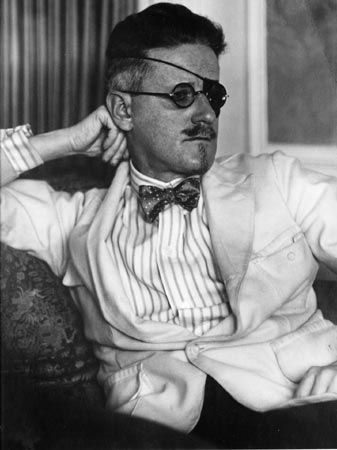
After some confusion that had to do with temporary gmail accounts and things of that nature, I think i have figured out how to log into my blog again. After a heavy dose of Ragtime, I think I'm finally starting to really get into it. It is certainly an unusual style of narration with a meandering narrative. In Ragtime Doctorov seems to present a third person narration that, from I can discern in my early readings, similar to Joyce's Portrait of the Artist as a Young Man in that the narrator, although more subtly, gains a consciousness as the novel progresses. Interestingly, while Protrait's characters are Irish and there is a focus on the struggle for freedom, in Ragtime, which is set later in history, there are immigrants, some of which are Irish, also struggling for freedom via class mobility. So although the time and location has changed, the struggle still persists. As I mentioned though, I'm am not yet far enough into Ragtime to fully flesh out any parallels between the two aforementioned novels. And on that note I'll leave you with a picture of James Joyce looking like a boss and get back to reading.


(Image taken from http://biblioklept.org/2008/09/22/james-joyce-reads-you-listen/)

Tuesday, May 10, 2011

Hats Off to Abe

As assigned, I wrote a short speech (instead of a paragraph) with the tone, content, and ideals that I believe Abraham Lincoln would have expressed in the face of the situation in Madison, Wisconsin this year. It is as follows:


        I stand before you today, seven score and nine years after the Emancipation Proclamation was issued, to once again defend the strength of the Union, although this time it is a Union of a different sort. Having completed neither high school nor college, I stand before you as an esoteric outlier. 
Though I received little formal schooling in my day, my day was far different than the day in which we have gathered on the steps of the Capital of the great state of Wisconsin. During my upbringing, although formal schooling was hard to come by, I always had a deep yearning to grow in my education. I read voraciously whenever the opportunity presented itself.  I would have been thrown into a joyous frenzy if I was given so much as a glimpse of the education system of today. Without my self-teaching I would never have become the man I was, and without the chance to expand their minds via education, I fear many a child will not grow into the men and women America needs them to be. 
But my speech today is about more than the importance of education; it is about the vitality of unity in America. Without our unity, we are simply men and women alone and vulnerable. In no instance is this more true than in the case of our construction workers, our plumbers and pipe fitters, our electricians, and the people with which we entrust the future of this great nation, our teachers. With that, I stand before you today citizens of Wisconsin, and I implore you to stand together. Stand together for today. Stand together for our future. 


Sunday, May 1, 2011

Another Angle

A lot of people have things they read or refer to when they need to find their center. For some people maybe it's Walden or even Goodnight Moon (which I also love). Personally, when I need to stop and make sense of the world around me, I reread the speech David Foster Wallace gave to Kenyon College's graduating class of 2005. I'll even go so far as to completely overgeneralize and boil it down to a single sentence for those of you who aren't too keen on reading: Believe it or not, you're not the center of the universe. (I'll also provide a link to those of you who do want to read it: http://online.wsj.com/article/SB122178211966454607.html)

Now to some people this comes as a shock to some people. And the way I worded it there was to an extent intentionally inflammatory (that's what you get for not wanting to read the actual speech). What prompts me to post about this specifically this evening? Indirectly, and I have to be delicate here in order to not contradict myself, it is the announcement of the killing of Osama bin Laden. Perhaps more accurately, it is the explosion if social media around the event. This historic event has helped me realize that social media outlets contradict completely the way of thinking David Foster Wallace expounds on in his speech. Social media is a soapbox from which anyone and their 12 year old cousin can yell into space about how they feel and post their prom pictures. It allows you to create a universe in which you very much are the epicenter.

And maybe you're thinking, "Dude, you're the one blogging about this not me, you dumb hypocrite!" Or maybe you're not quite that mean, but you're politely questioning if this is simply another one of the aforementioned self-indulgent and often insufferable shouts into space. If you are asking that, I would like to state very plainly it is not. I'm not posting on here about the events or potential resulting consequences of the killing of Osama bin Laden. I could very well do that, but frankly, I don't think I'm at all qualified. To my knowledge, most of my friends on facebook don't really know very much about international relations or political theory. A couple of them could make some pretty clever quips and that's great. But at the end of the day, maybe all these status updates and tweets are clever and well-received, but what is shouting into space going to change?

What this is for me, is a questioning of the value having a Facebook or a Twitter account. It is me wondering if I'm actually so self-indulgent that I believe it is a constructive use of other people's time to read the small segment of a Phish song I found to be important at the time. It is a reflection on what appears to me to be collective shift toward egotism. If I hadn't already ranted for about 500 words already I could very easily apply what I'm talking about to Putnam and DeTocqueville, but tonight, o be blunt, I'd rather not. I'm not posting this because I know the answers; I'm posting it because I believe that the relationship between people and social media is one that is worth investigating. I'm posting this because maybe somewhere beneath tonight's overwhelming display of clever quipping and rarely matched nationalism, lives a problem in the way we see the world. And I don't care if you "like" it or not.

Friday, April 29, 2011

Black Elk Speaks, Brian Listens

Black Elk speaks, while well written, is proving incredibly hard to read. First, it's been incredibly sad so far...and I'm not talking "The Notebook"-style sad. All too often people, speaking mostly for myself here, completely forget that we weren't the first ones on the land we occupy, and that we don't get it by peacefully swapping wampum; there is an ugly side to the history of the land of opportunity. Although hard to read, this book is undoubtably important. I think it's pretty terrible that this side of history is so often skipped over, and that it is important to learn from our mistakes so we don't repeat them (a little Kindergarten wisdom for you).

Wednesday, April 27, 2011

A Real Alternative History

Before I get started, Howard Zinn and I are pretty tight. We have been for several years, and likely will continue to be for many more. But the thing with Zinn is although he writes a history for the oppressed, often telling of the seedy underbelly of America's commonly taught celebratory history, he hasn't exactly been a member of the downtrodden communities himself. And I'd say that's a good thing for him. I don't think oppression is worth the possibility of a resulting book deal. However, in Black Elk Speaks we're really being presented with an alternative history from the point of view of someone who is a member of one of the downtrodden communities of American history. Although, and I reiterate, oppression is not worth the book deal, by hearing from someone who has genuinely experienced such hard times, a new point of view is made available to everyone willing to read it. It's like this: The Tallest Man on Earth did an awesome cover of "I Want You" by Bob Dylan. (Link: http://www.daytrotter.com/dt/the-tallest-man-on-earth-concert/20030843-3738157.html) Here is an artist who was clearly influenced greatly by the folk legend, and he does his best to get Bob's message across while adding his own style. And that's respectable, but at the same time he isn't Bob Dylan and never will be. In the case of this analogy, Howard Zinn is The Tallest Man on Earth.

Monday, March 14, 2011

Religious Voluntary Associations

Last night as I returned from Buffalo Wild Wings in Lakeville, a friend I was riding with spotted a sign that read, "This highway adopted by Minnesota Atheists" (paraphased). He commented on how he viewed that as a good thing, but was surprised that they were "that well organized." I instantly connected this idea with the state of social capital in America today. In this sign is presented a counterforce to the decline in religious affiliation in the United States. Although there have for years been solely religious groups, perhaps the dawn of the not only secular, but unreligious group is on the way. It's interesting to think about at least.

Tuesday, March 8, 2011

The United States isn't Just Being Nice

There's one thing that just absolutely confounded me about the discussion in class on Monday. I tried to ignore it but I just can't seem to get over it. It doesn't make sense. I don't even think it was true. But people didn't even seem to bat and eye when it was said. The notion that the United States intervenes throughout the world and 1) is well liked for it and 2) is doing so out of some sense of moral duty or to be nice just kept coming up. Maybe I'm just being cynical here, but I really don't think that's the case here.
FIrst of all the idea that, as one of my fellow AmConners said, if there was a situation where things were going wrong and we didn't step in the world would be angry with us. For me, the case of Somalia comes to mind as a counter argument that can be used. Have things been awful there for several years? Yes. Has the US intervened to stop the problem militarily? Far from it. Would it be a "nice" thing to do? Of course. The United States doesn't intervene based on some moral code; it serves it's interests. That's all. That's the end of it.
Next point: The US intervening throughout the globe has somehow made us popular with the rest of the world. I would like some stats to back this figure up, mostly because I don't think they actually exist. In fact, a quick search provided some stats that during the Bush Administration's increased intervention in foreign affairs global views of the United States decreased dramatically.
Source: http://news.bbc.co.uk/2/hi/americas/6286755.stm

I just had to get that out into the open, because the views expressed during Monday's class on the world's view seems terribly misguided.

Friday, March 4, 2011

Abstract Nouns

This post has little to do with deTocqueville. However, it was in reading Democracy in America that I was reminded of my disdain for the in-concision of abstract nouns. The two main culprits here: religion and democracy. There are a plethora of definitions of both, so before any real discussion relating to them must begin by determining the meaning intended by the author. Maybe my real qualm here is not with Alexis, but the English language itself. Maybe in deToucqueville's French his intentions are much more clear. Maybe it was just lost in translation...

Monday, February 21, 2011

Cullen Meaning from the American Dream (pun intended)

I really enjoyed the reading for class today. As I read the assigned chapter 3 of Jim Cullen's The American Dream the pages flew by. They were interesting, approachable, and concise. While maybe not the most dense reading I've done for the class, it was a nice break from more dense pieces like the excerpts of "Democratic Vistas" and the last speech/article on American pietism. While not overly complex, I still thought Cullen did a good job of demonstrating the American Dream as being largely about upward mobility, and unlike McLoughlin, showing how it has evolved over the short life of this nation.

Thursday, February 17, 2011

Misconceptions On 20th Century American Liturature

In the article, Pietism and the American Character, William McLouglin begins to wrap up his sweeping piece that generalizes American culture and society as a whole (as of 1965, when the article was published) by commenting on how even modern American literature conforms to his thesis on American pietism.

Some of the examples like Faulkner and Melville's works seem to fit with the religiosity McLouglin speaks of. Others like Salinger, Fitzgerald, and Hemingway (who is conveniently left out) fall flat to me. In order to make the former two examples work, William has to go so far and become so vague that he simply says that their "quest for perfection is bound to fail because it is based on false premises, nevertheless write on in search of it." Frankly, this sentence to me says very little about the authors at all. Does any author really think their book is perfect? Hemingway was the king of revision and even said in an interview, "I rewrote the ending of Farewell to Arms 39 times before I was satisfied." Does this show he's dedicated to his craft? Of course it does; writing was his job and he clearly took it seriously. Does this mean he was in a "quest for perfection" guided by the ideals of American pietism? Not at all. He is quoted as saying "until I was satisfied," which is worlds away from "before it was perfect."

Then WIlliam quotes Lewis who comments on the heroes of contemporary American fiction, stating that they "share in their common aloneness...each of them struggles tirelessly, sometimes unwittingly and often absurdly, to realize the full potentialities of the classic figures which each represents: the Emersonian figure, 'the simple genuine self against the whole world."
I personally don't explicitly disagree with this statement by Lewis, but I definitely disagree with where William takes he. The author of the article continues on to relate these "classic Emersonian figures" to the "classic pietistic figure of the Christian man."
Let's quickly review the characters that could fall into the category McLoughlin is trying to call the "classic pietistic figure[s] of the Christian man:"
Nick Carraway
Frederic Henry
Holden Caulfield
and so forth...

Also, this talk of absurd, tiresome struggle sounds quite a bit like Camus' brand of Absurdism, as exemplified in both The Plague and The Stranger. By making the qualifications to support his argument so incredibly broad, William McLoughlin has really just described a lot of literature, both American and foreign.
I realize that I wasn't around in the year 1965 so I may have some delusions about what the state of America was like at that time, but there are some things I do know for a fact.
In the year 1965:

Hemingway's A Farewell to Arms, Camus' The Stranger and The Plague, Salinger's Catcher in the Rye, and Fitzgerald's The Great Gatsby had all been published.
Camus, Fitzgerald, and Hemingway had all died prior to this article's publication.
The Grateful Dead was in it's first year of existence.
Andy Warhol was extremely active in the art world.  (Conveniently left unmentioned in the section on art)
Andy Warhol is undoubtably a quintessential, iconic American artist, who completely goes against the idea of American pietism.

What I'm trying to get at here, is that while for part of the population this American pietism is viewed as the essence of being an American, there was at the time this article was written, already a strong counter culture that would strongly disagree with this. This includes some authors William tried to use it make his argument, as well as ones he just ignores completely.

...and don't even get me started on McLoughlin's use of the term "conspicuous consumption," which was borrowed from American economist Thorstein Veblen...

Also, here's a modern adaptation of the "American Dream:"

http://greatgatsbygame.com/

Friday, February 11, 2011

Paul Johnson, may I have a word?

Paul Johnson and I have a history. Well actually we have two histories. And they don't always match. Early on in the school year, I was assigned to read A History of the American People for AmCon, and it has been a trying experience ever since. I have sarcastically referred to him as "fellow scholar Paul Johnson" and even several times completely skipped reading the assigned sections of his books. Was it noticeable? Hardly. When it comes to hypothesizing what the esteemed Mr. Johnson has to say on a subject, the process is usually as follows:

Q. Does it have to do with a founding father or major Christian religious figure?
A. You'll usually find a glowing review of the character of the individual, with little about the events that actually took place. (See Ben Franklin, Thomas Jefferson, John Winthrop)
Q. Does it have to do with anything in contrast with the modern conservative ideology?
A. Look in Zinn. You'll probably find very little or else Johnson has conveniently erased it from history.
Q. Will what I'm looking for be discussed (if it is discussed; see second question) in an objective, fair, and rational manner?
A. Probably not. Johnson's religious schooling (Note: not necessarily a bad thing; one of the few things Pauly and I have in common.) seems to have blinded him and left him unable to remain even somewhat objective in his sweeping prose.

Of course there are exceptions to these broad generalizations, which is why I continue to read on in Mr. Johnson's history. Hopefully, it will allow me to better refine mine.

On a more positive note, I did enjoy his linking of the Second Great Awakening and the birth of the modern cereal industry.

Tuesday, February 8, 2011

Does Walter Falter?

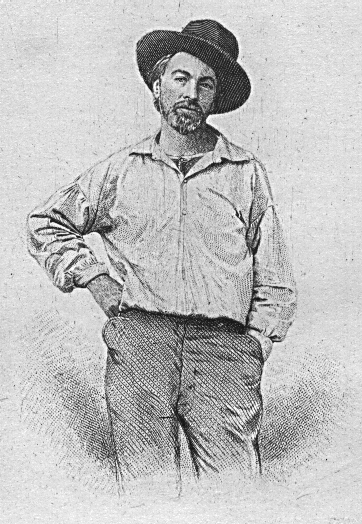
It is important when reading Whitman’s “Democratic Vistas” to understand the context in which it was written. As can be expected, America was a very different place in the year 1871, and Whitman’s observations certainly reflect this.  David Brooks wrote an modern reflection on Whitman’s essay, which helps convey the happenings of Whitman’s era. Brooks tells his readers that Whitman was optimistic that the Civil War would have purged the rejoined states of their prior problems and allow them to move forward in terms of culture, education, and literature. Whitman speaks of an ideal future America where the nation is a stronger democracy through “the copious production of perfect characters among the people, and though the advent of a sane and pervading religiousness.” Although there is certainly contention over what exactly the “American dream” is, it is safe to say that this is not everyone’s idea of it. 
This is not to say, necessarily, that the American Dream has changed or expanded. Whitman, while one of the most critically acclaimed American poets of all time, cannot and did not speak for every one of this contemporaries. The number of people that do agree with his notion of the American dream, I would say, has likely fallen greatly since the year 1871 though. I am also willing to argue that his lofty aspirations for the United States of America have not even come close to having been fulfilled in the one hundred-forty years that have elapsed since “Democratic Vistas” was written. Whitman repeatedly explains that expects a class of elite writers, unlike what the world has ever seen, to arise from America. He also calls the “American born populace, the peacablest and most good-natured race in the world” as well as the “most personally independent and intelligent.”
While I would love to say that Walt was spot on with his predictions, I’m afraid that there are glaring statistics that would serve as an irrefutable rebuttal. The body of literature that has come out of America in the last century hardly compares the canon of classics that exists. I love Bukowski as much as, if not more than, the next guy, and Salinger could certainly put words together, but America hasn’t produced anything close to the level of Tolstoy, Dostoyevsky, or Shakespeare. I think the American industrial military complex says plenty and violent crime statistics say more than enough about the “peaceablest and most good-natured race in the world” part of Whitman’s prediction.   As for intelligence, American children are falling behind other nations in terms of education; there is nothing intelligent about failing to invest in future generations. The aspect of today’s American population Whitman comes closest to being right about would be the independence part. Unfortunately, if you ask Robert Putnam he’d tell you that’s not necessarily a good thing. In fact he’d go so far as tell you that this lack of social capital is leading to the disintegration of the American community. 
However, if Whitman were to read this response today, David Brooks says that he would likely agree with a large part of it. In fact shortly after writing “Democratic Vistas” Whitman realized that perhaps his optimism got the best of him and the American people are largely more apathetic then he initially realized. I was somewhat surprised that Brooks wrote such a glowing response to this essay. What Brooks seems to have liked about “Vistas” was the way it aligns so well with the ideas of American exceptionalism and overall patriotism. Brooks even opens his piece with “Whenever I hear people say something stupid about America, which is often these days, I want to punch them in the nose and hand them Walt Whitman’s 1871 essay ‘Democratic Vistas’.” Maybe this poor first impression has tainted the voice Brooks writes with for me, but saying this and then talking about how even Whitman came to realize how he was disillusioned about America makes Brooks seems almost as contradictory as Whitman was. The difference is that Whitman openly admitted his contradictions. But maybe I just need a punch in the nose.